Insights
Redefining Innovation: How Ethical AI Can Strengthen IP and Empower Creators
Julie MacDonell
Mar 23, 2026
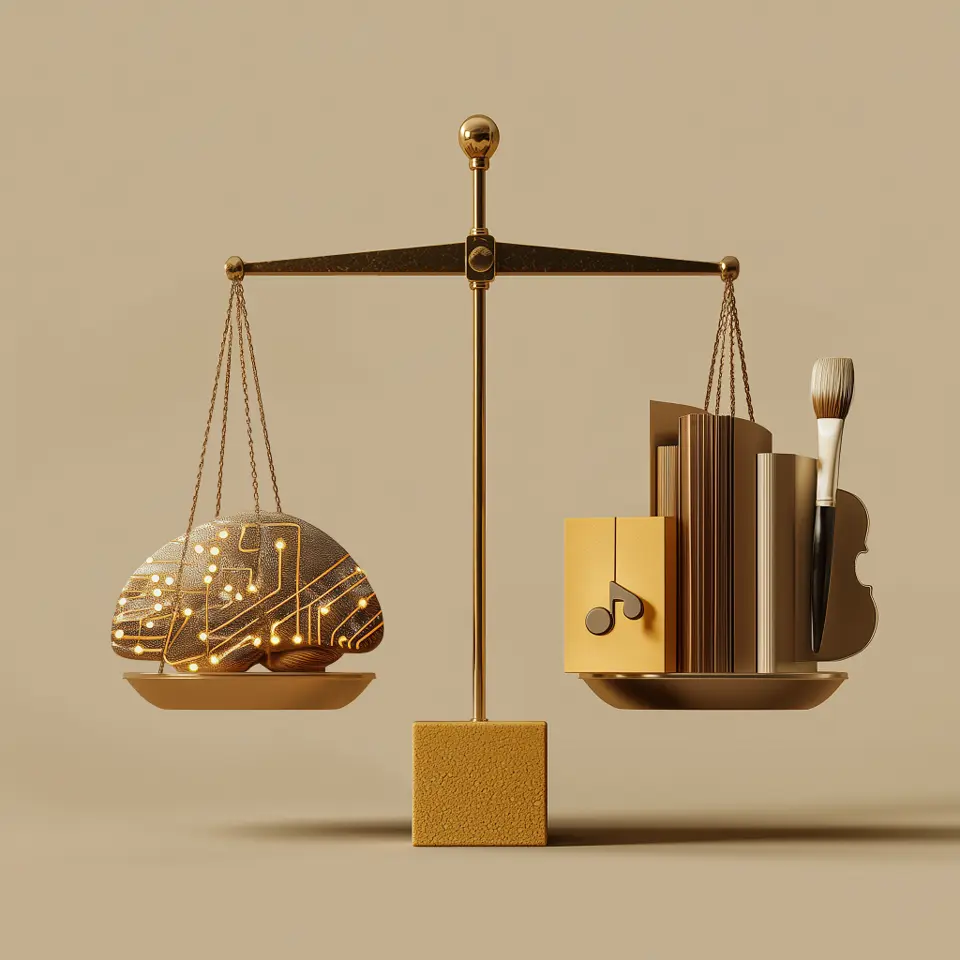

Earlier this year, hundreds of artists, musicians, actors, and writers signed onto the “Stealing Isn’t Innovation” campaign. They weren’t rejecting technology. Nor were they calling for a moratorium on artificial intelligence. They were challenging the foundation on which much of today’s generative AI has been built: the large-scale use of copyrighted works without consent or compensation.
Trademark lawyers and others in the intellectual property space are familiar with this debate. For years, they’ve asked: What counts as fair use when AI trains on copyrighted works? Can AI truly transform creative works, or is it simply repackaging them?
These questions are critical. But there’s another layer to the conversation—one that requires us to examine who has historically been recognized, compensated, and structurally protected within IP systems, and who has not. Because we talk about AI “scraping the internet,” we’re not talking about abstract data—we’re talking about protected works, authorship, and economic rights.
The Myth of Neutrality in IP
IP law is often framed as neutral infrastructure, a system that rewards innovation and protects creators. In practice, however, access to ownership, the ability to enforce rights, and opportunities for monetization have long been shaped by structural inequalities.
Globally, women remain underrepresented among patent holders. The World Intellectual Property Organization consistently reports that women account for only a minority of named inventors in international patent filings. And in copyright-intensive industries like music, publishing, and film, women are less likely to control master rights, publishing rights, or the long-term royalty streams that determine economic leverage.
This context is crucial for understanding the implications of AI.
If women and historically marginalized creators have less control over the rights to their work, and AI systems are trained on massive datasets of content without consent or compensation—then the outcome is far from neutral. It reinforces existing disparities in who owns and benefits from creative work.
The Creative Work Behind AI Systems
Generative AI learns from vast collections of text, images, music, and video. In the trademark context, this can include brand logos, packaging designs, and visual identities. When models train on large collections of brand imagery, their outputs may resemble existing marks, prompting questions about dilution, confusion, and fair use.
These datasets also include work by independent authors, illustrators, journalists, screenwriters, and designers, many of whom don’t have the bargaining power of large studios or established rights holders.
When AI platforms use this material without clear licensing agreements, the financial rewards usually flow to the companies that own the platforms—not the creators who produced the work. This isn’t just a technicality; it’s a matter of fairness and recognition.
How Representation Shapes IP
For IP professionals, representation shapes the evolution of law and industry practice over time. It also raises important questions:
Who negotiates AI training agreements?
Who drafts the rules for how data can be used?
Who decides what counts as “transformative” use of content?
Who influences AI regulations and policies?
Beyond the gender gap in IP ownership, women remain underrepresented in technology leadership and AI development. At the same time, in many creative industries they are more often independent creators than institutional rights holders. This imbalance affects bargaining power, access to protection, and long-term revenue. And it can be baked into contracts, workflows, and even legal precedent—which is why female-focused AI companies are so vital.
Building an Ethical AI
To start bridging these gaps in representation, we need ethical AI—systems that prioritize transparency, accountability, and fairness without slowing innovation. Haloo has consistently emphasized that AI must be clear about the data it uses, disclose its limitations, and support, rather than replace, human judgment.
The same principles apply wherever AI interacts with copyrighted creative work. To put them into practice, IP lawyers should:
Know where an AI system’s data comes from.
Disclose any potential limitations in the data.
Consider whether systems that generate value from creative work include mechanisms for consent and compensation.
These measures help build trust while protecting both users and creators.
Putting Humans at the Center of AI Innovation
There’s a misconception out there that supporting ethical AI is anti-innovation. In reality, the opposite is true. Ethical frameworks make AI more effective, more trusted, and ultimately more sustainable.
AI systems should be designed to:
Use licensed or consented data whenever possible.
Allow creators to share in the value their work generates.
Be transparent about the sources and scope of their training data.
Provide mechanisms for oversight, auditing, and accountability.
With these structures in place, AI can advance creative innovation without leaving creators behind in the process. This keeps human creativity firmly at the heart of the innovation ecosystem.
A Pivotal Moment for AI Governance
IP law has always evolved alongside new technologies, from photography and film to sound recording and streaming. Generative AI is undeniably revolutionary, but it’s also the latest in a long line of technological disruptions. Yet AI’s ability to learn from and repurpose creative work at unprecedented speed makes thoughtful governance more important than ever.
And this is where the voices of women and diverse groups become essential. Systems designed without representation run the risk of repeating historical imbalances—only faster and with greater impact. By embedding ethical and inclusive practices into AI development, legal professionals can ensure that the future of AI advances equality across all communities.
Closing Thoughts: Understanding Innovation in the Age of AI
“Stealing Isn’t Innovation” is a striking slogan, but the question it raises is deeper: what does innovation mean in a world where AI leverages human creativity?
If we measure innovation solely by technological capability, the rewards end up concentrated in the hands of a small, select group. But if innovation includes sustainable value creation, transparency, and fair participation, AI can expand opportunity for creators while delivering economic and cultural benefits at scale.
For IP professionals, the challenge is guiding AI responsibly. This involves structuring contracts, workflows, and policies that align the technology with the core goals of intellectual property: supporting creativity, enabling fair use, and ensuring accountability.
AI and IP are increasingly intertwined. Grounding AI development in principles like recognition, consent, and representation helps ensure that technology elevates—rather than replaces—-human creativity.